
Collabrun
LiveAffiliate creator programmes for TikTok Shop sellers
Collabrun began as the affiliate module inside CogsIQ and became a product of its own, with its own name, domain and front door. Since 7 October 2026 it has also been in the app store in TikTok Shop Seller Center, so US sellers can install it where they already run their shop. It is designed, built and operated in-house by the same person who scopes client work, and it shows what happens when a feature outgrows the product it was born in.
Also in the TikTok Shop app store since 7 October 2026, for US sellers signed in to Seller Center.
The problem
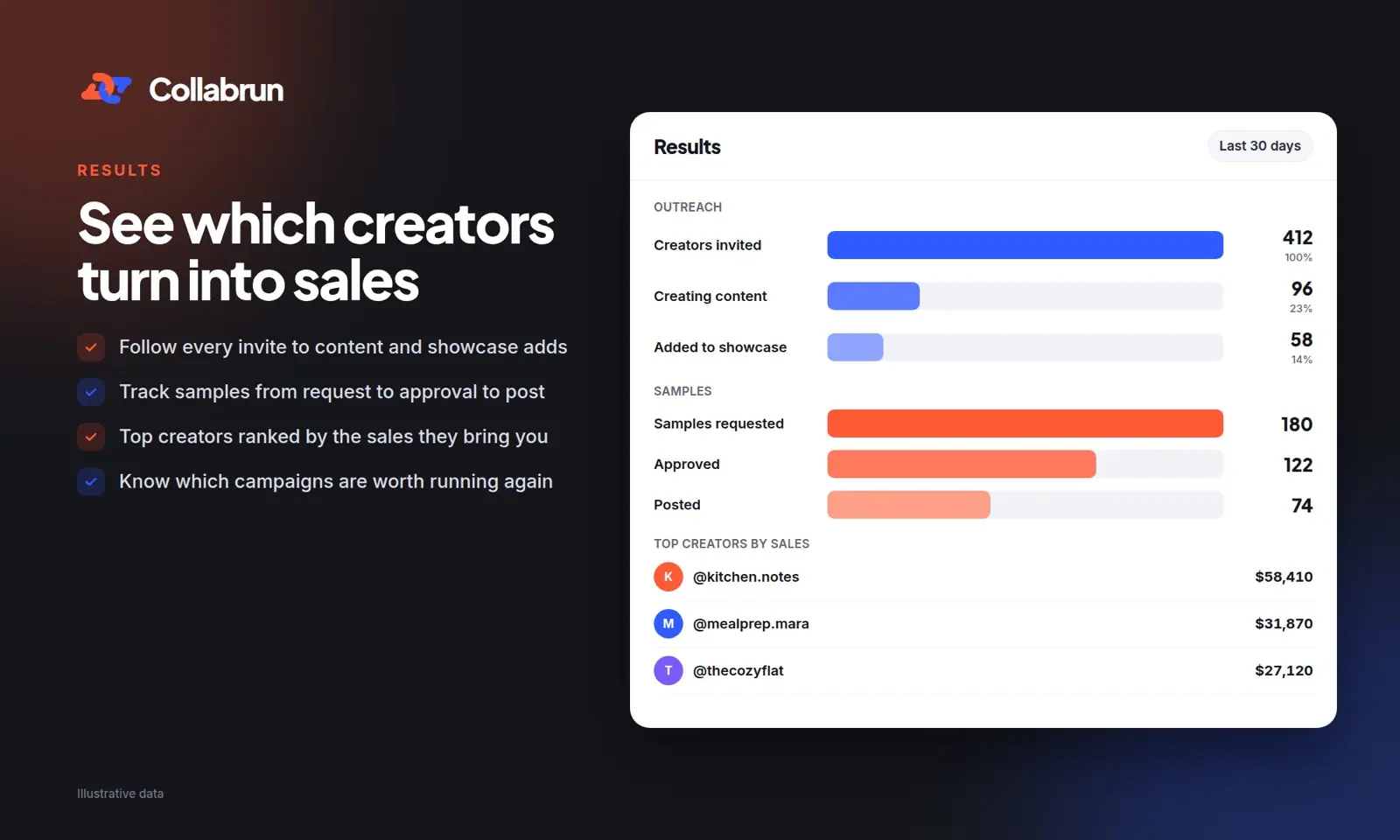
Affiliate creators are how a TikTok Shop grows, and running the programme is relentless admin. It means finding creators worth a sample, inviting them within the platform's weekly allowance, deciding who gets free product, chasing them to post, and then working out whether any of it paid. Sellers do the first four by hand and never get to the fifth.
The tools that exist report GMV: what a creator sold. GMV is not what the seller kept. After the creator's commission, the cost of the units that shipped, the platform's fees, refunds, handling and the samples given away, the creator who sold the most can be the one who lost money. Nobody was showing that number.
The hard part
Attribution with two clocks. Profit is counted in the period the order was placed, because that is how the leaderboard beside it counts GMV, but the money is read through to today, so an order placed in the period and settled after it still lands on its creator, with every refund that has arrived since. Put profit on the settlement clock instead and the two columns on one row describe different orders, and the finding becomes an artefact of timing.
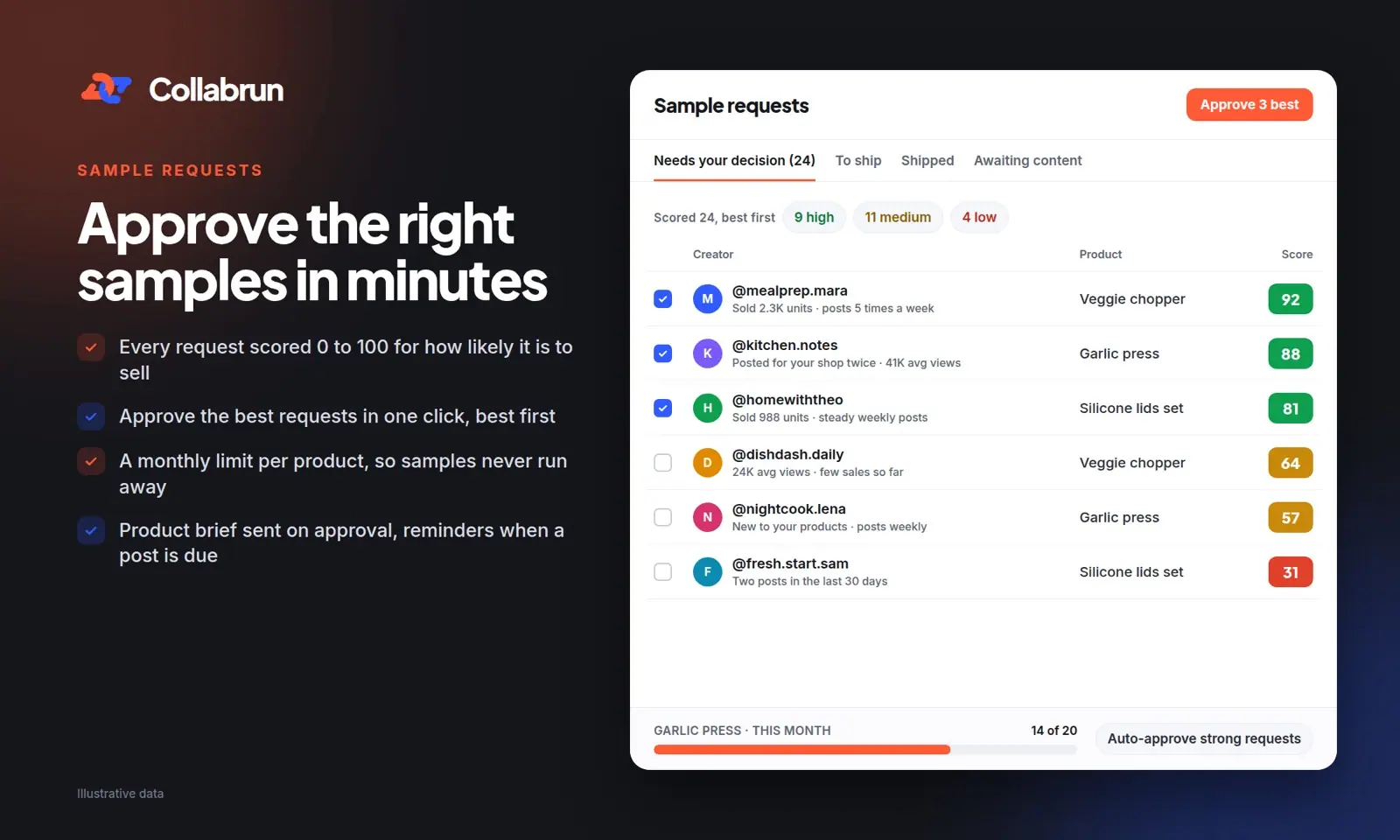
Scoring people fairly. A sample request is scored out of 100 in four parts: posts with samples, sales generation, post frequency and content quality. Scoring against absolute scales set by large creators made a small creator who posts for most samples look poor, so three of the four parts are percentiles among the creators who have asked this shop, and follower count is not scored at all. An audience that does not buy is not potential.
One codebase, two brands. CogsIQ customers keep CogsIQ, affiliate pages included; a standalone sign-up sees Collabrun everywhere. The choice is made per host in a single function, and the two renderings were checked by diffing 96 screenshots against the previous build, identical apart from antialiasing noise. Cookies cannot span two registrable domains, so signing in across cogsiq.io and collabrun.com uses a hand-off token that is spent once, dies after a minute, works only on the host it was minted for and only in the browser holding its nonce.
What we built
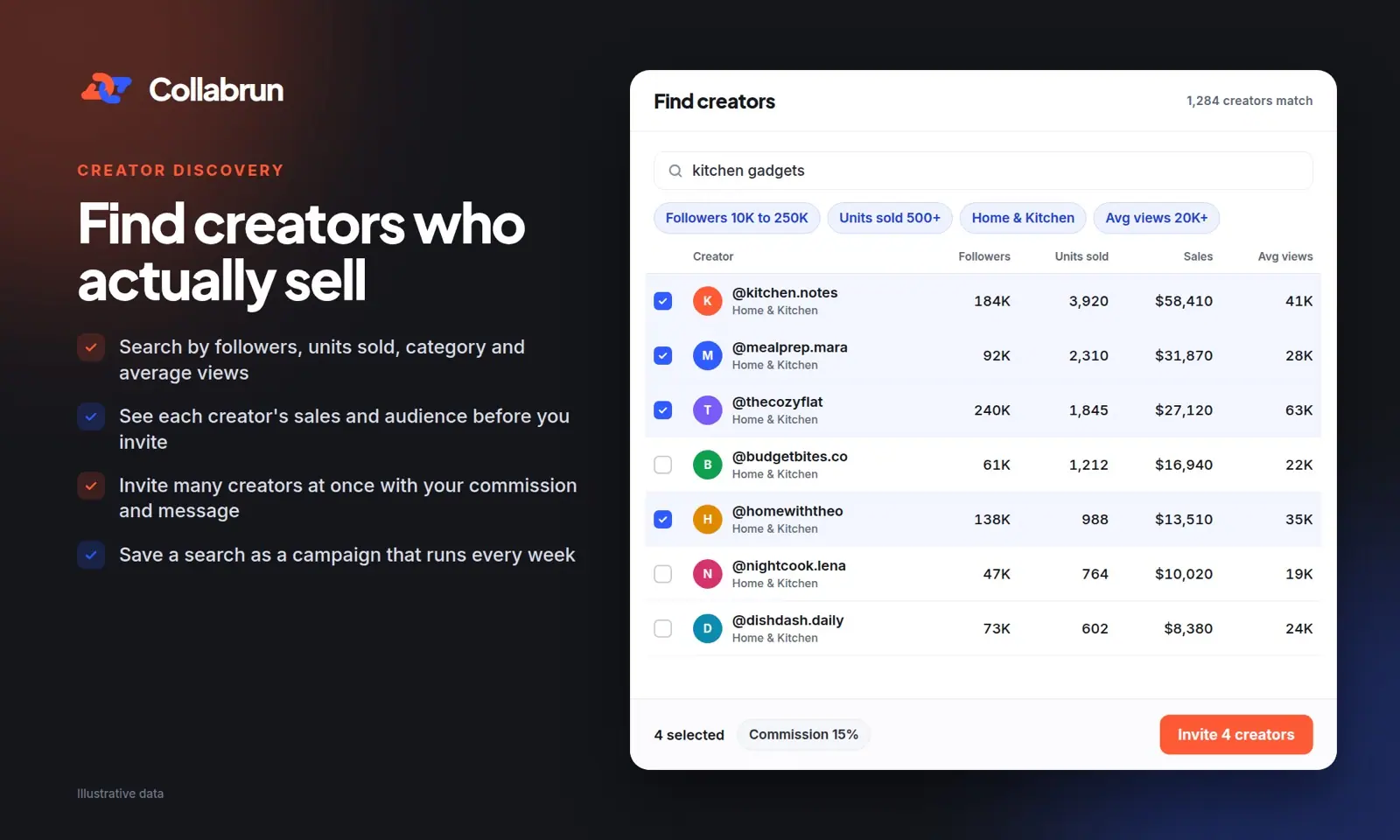
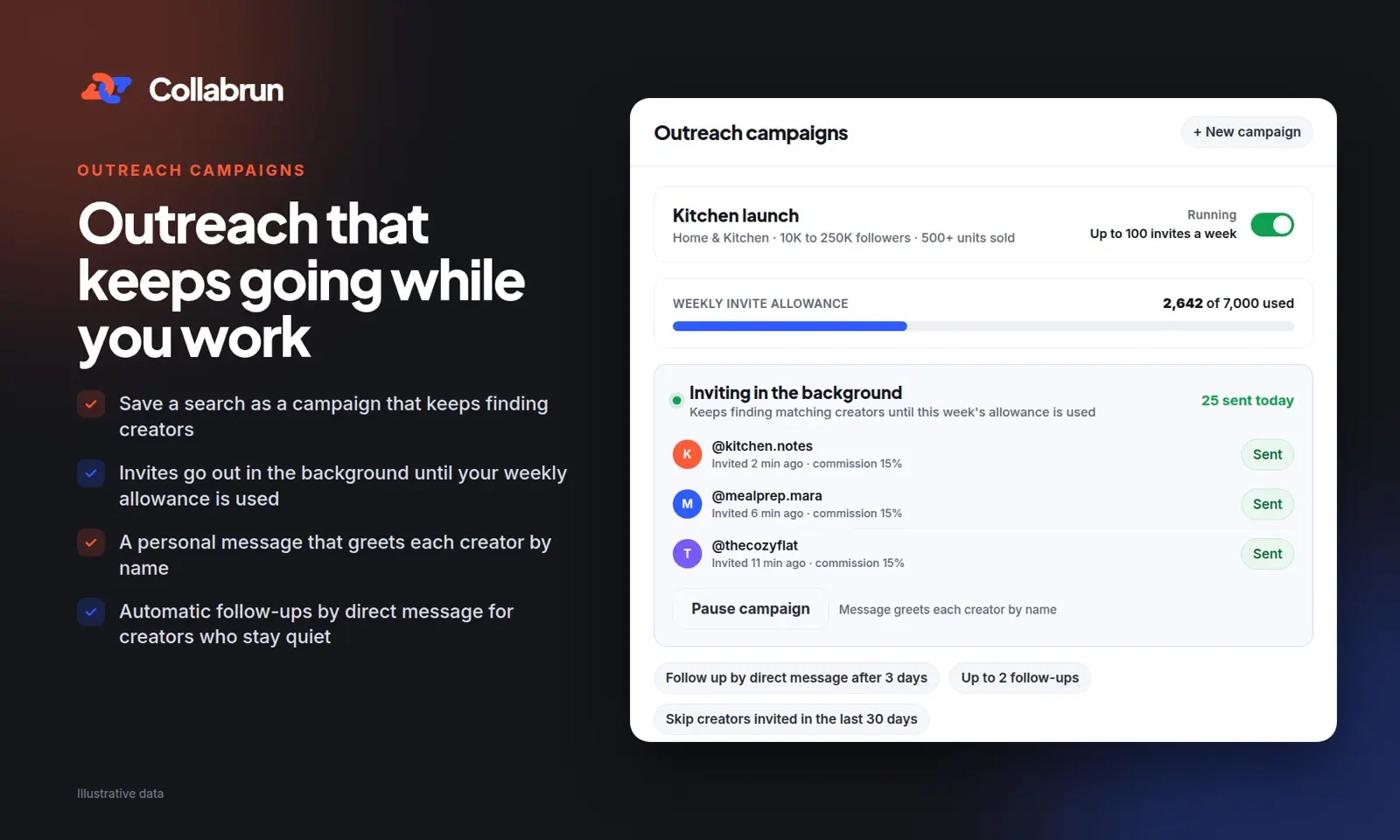
Creator search over TikTok's marketplace with the filters that decide whether a creator is worth a sample, and a look-alike ranking that starts from the shop's most profitable creators. Saved searches become campaigns: a background job keeps finding matching creators and sending invites, with commission, samples and a message, until the week's allowance is used, pausing on request and following up by re-invite or direct message. Message and brief drafts come from a model that is given only the campaign's own facts and told to invent nothing, and every draft is checked on the way out before the seller edits it.
Sample requests arrive scored, with rules that approve the ones the seller would approve anyway, a monthly cap per product, an automatic brief on approval, reminders to post, and an exclusion for creators who never do. Where a creator has asked other shops on Collabrun for samples, that record counts too.
The dashboard is free for every connected shop and reads real figures: TikTok's Shop Health score, affiliate GMV and orders, videos posted, the creator funnel from reached to converting, top performers, creator levels and retention by monthly cohort. Billing runs through Stripe with per-shop, multi-shop and combined CogsIQ and Collabrun plans, and the server refuses any change that would bill a shop twice.
Why it matters to a client
Spinning a module out as its own product is a decision most teams make too late or too expensively. Here it cost a brand switch, a sign-in hand-off and a marketing site, because the module had been built with its own front door from the start. That is the kind of call we help clients make early: which parts of a system might one day need to stand alone, and what it costs now to keep that option open.
Want something like this built?
We take on a small number of product builds each year, from first prototype to a system that runs itself. Tell us what you have in mind.